The last two Utility Information Pipeline issues have been Part I and Part II of the results of the 2026 Utility Staffing Survey. This year’s survey is the sixth biennial Utility Staffing Survey I’ve conducted. For comparison, here are the results from previous Utility Staffing Surveys.
I’m always intrigued by patterns, so I’ve tracked each of the five metrics from the first survey in which they appeared through this year’s survey.
New graphing platform
As with the two previous issues, I’m using a new product in place of the static graphs I’ve used in the past. The charts (now properly called data visualizations or “data vizzes”, as I’m learning) for this year’s survey are created with Tableau Public.
The versions of each graph in this newsletter are static screenshots. However, clicking on any of the graphics will open the interactive data viz in Tableau Public, where you can hover over each year to view a tooltip describing the data.
Meter reading processing
The 2016 Utility Staffing Survey only asked if meter readings were manually entered or imported, without a way for respondents to indicate how they were imported. So, for meter readings, 2018 is the starting year.
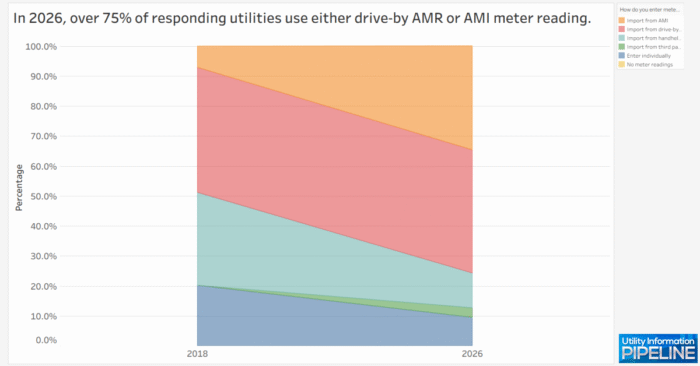
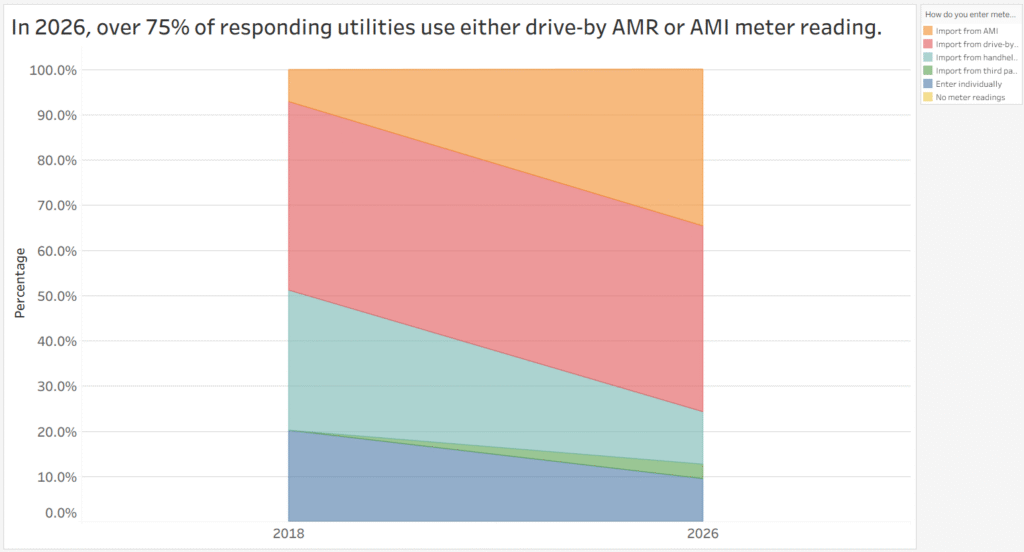
As you might expect, the survey has shown an increase in the use of AMI systems from 7.1% in 2016 to 34.7% this year. This increase offsets the number of utilities that use handhelds or enter meter readings.
Somewhat surprisingly, the use of drive-by AMR systems has remained relatively flat, from 41.7% in 2018 to 41.1% this year. As shown below, electronic meter reading has grown to account for just over 75% of responding utilities.
Bill printing
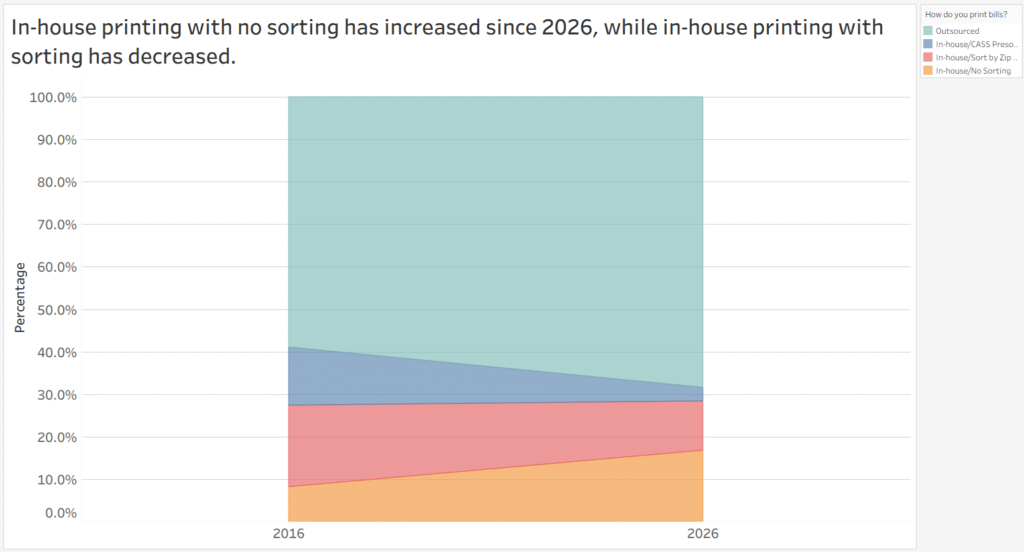
Predictably, outsource printing has always been the most popular method, increasing from 58.9% in 2016 to 68.4% this year.
What does surprise me is that for the remaining utilities that print bills in-house, both zip code and CASS presorting have decreased, while printing with no sorting has increased. Dispensing with presorting saves time and is therefore more efficient, but it also means the utility pays more in postage.
Mail payment processing
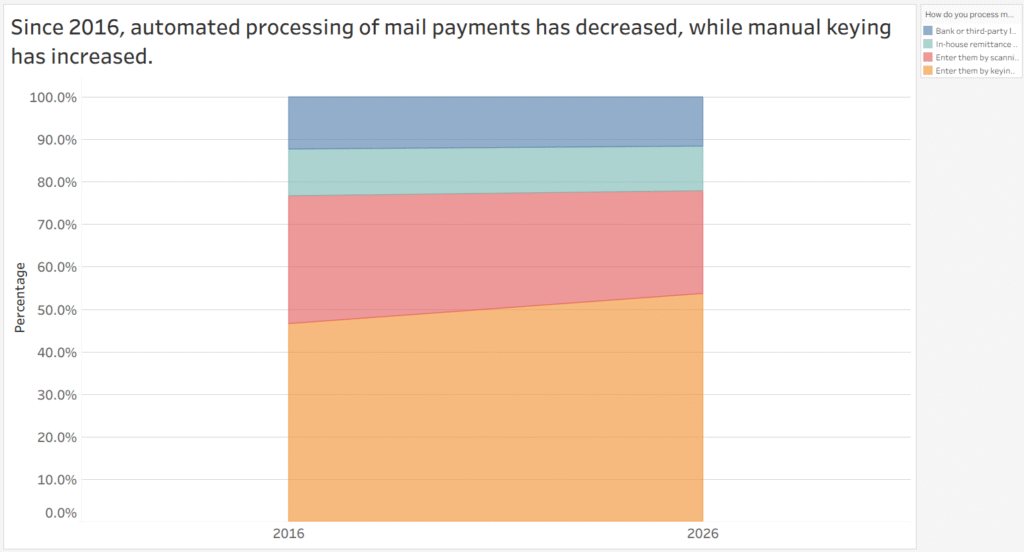
In what might be the most labor-intensive task in some utility business offices, the share of mail payments being keyed has increased from 46.6% in 2016 to 53.7% this year. Accordingly, each of the three methods of automating mail payments has decreased – scanning a barcode (30.1% to 24.2%), in-house remittance processing system (11.0% to 10.5%), and bank or third-party lockbox (12.3% to 11.6%).
Phone credit card payments
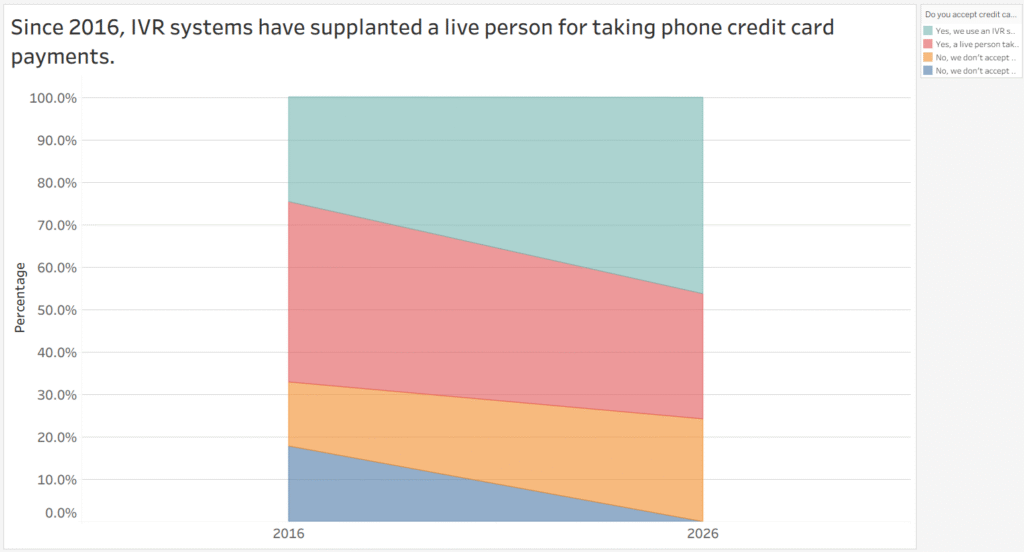
One trend I’m not surprised by is the increase in the use of IVR systems for accepting credit card payments, from 24.7% in 2016 to 46.3% this year. By the same token, I’m glad to see the number of utilities using a live person to take phone credit card payments has decreased, from 42.5% in 2016 to 29.5% this year. However, that’s still too high, in my opinion.
Service order processing
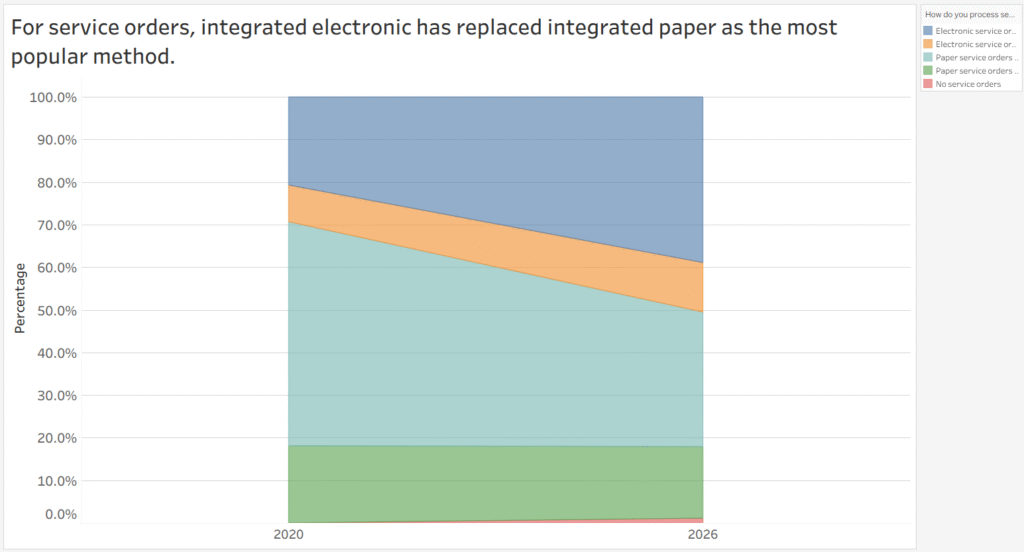
Service order processing was only introduced with the 2020 Utility Staffing Survey, so that’s the baseline for comparison. While the trend has been toward electronic service orders (integrated with billing software from 20.7% to 38.9%, and not integrated from 8.6% to 11.6), the overall trend has been slightly away from integration, with 73.3% in 2016 to 70.5% this year.
The trend toward electronic service orders increases productivity for field staff. However, if they are not integrated with the billing software, they must be entered manually, which does nothing to improve office staff productivity.
Is your office adequately staffed?
If you’re unsure if your business office is adequately staffed, this is one of the things I can advise you on after completing a business review. Please give me a call at 919-673-4050 or email me at gary@utilityinformationpipeline.com for more information.

© 2026 Gary Sanders